Sampling strategy
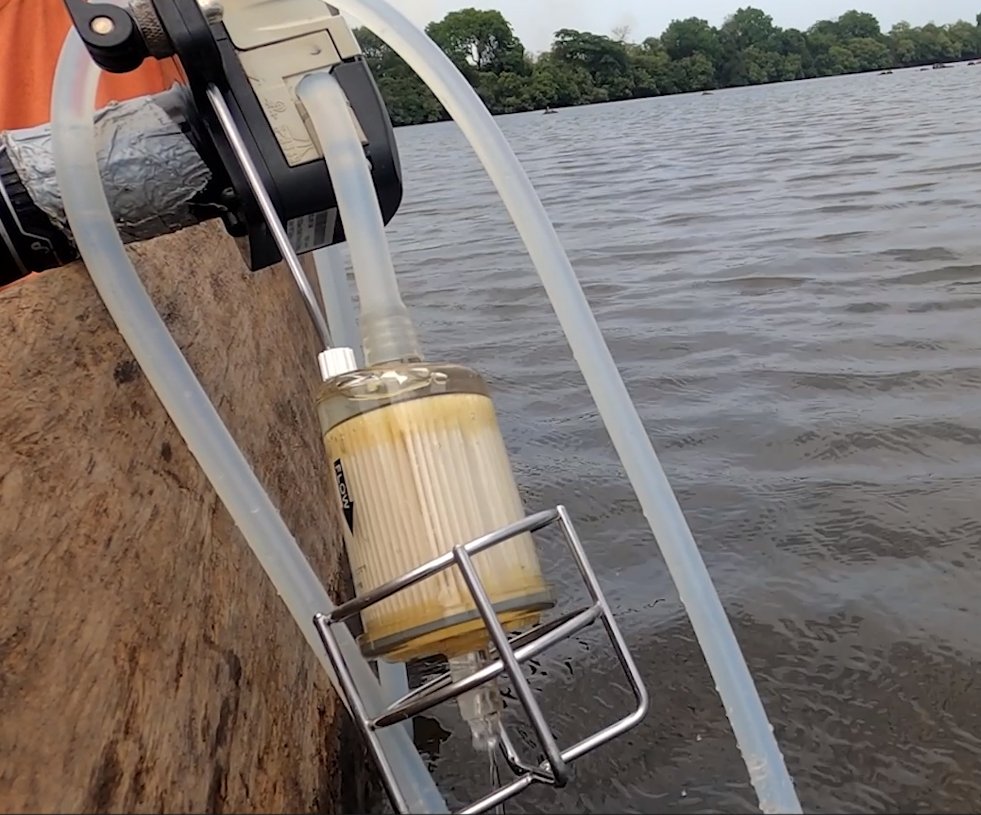
eDNA is highly localized and unevenly distributed. Volume matters — the more water you filter, the more DNA you collect from your site. But so does how you collect — we filter while moving along transects, integrating water from multiple microhabitats rather than taking a static sample from one point.
Number of PCR replicates
The DNA of your target biological groups needs to be amplified in order to be detected. We rely on PCR (Polymerase Chain Reaction) — a molecular photocopier that multiplies the DNA fragments we’re interested in. Using 12 PCR replicates, as we do at Spygen, means amplifying your sampled DNA in 12 independent subsamples. Due to the natural variability in PCR and the heterogeneous distribution of rare DNA, a species present at low concentration may fail to amplify in one reaction but succeed in another.
Sequencing depth
This is what drives detection power — and it works just like statistics. The more DNA strands you sequence (i.e. the more DNA strands you analyse or read), the greater your chances of detecting rare or low-abundance species.