eDNA proved to have high detection sensitivity, with over 95% probability of detecting most species.
4 invasive species were found outside their known range, indicating an unnoticed but ongoing colonization process. 3 sphaerid species were also detected beyond their known distribution, including 2 boreal relict species with restricted ranges in France.
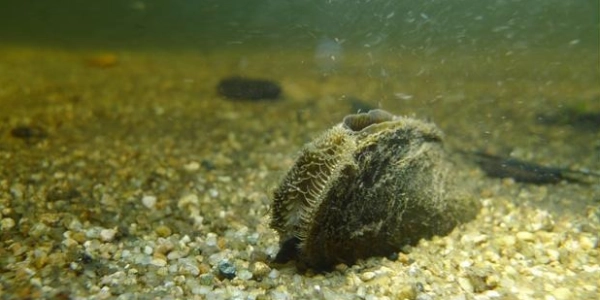
The Thick-shelled river mussel, a protected species in France, was identified in places where it had not been noticed before, except from very few old data.
Conversely, some species currently considered widespread and not of conservation concern were found in surprisingly few localities, suggesting a previously undetected but significant decline in their conservation status.
Why this matters?
Large-scale eDNA surveys are a powerful tool for accurately mapping freshwater biodiversity. Sampling effort can be completed within a limited time frame and the use of a standardized protocol allows results to be reliably aggregated and interpreted.
This eDNA atlas has the advantage of being based on live mussel populations, whereas traditional surveys combine data from both live individuals and shells, often resulting in overly optimistic distribution maps and misleading assessments of population trends.
Freshwater bivalves face multiple threats (pollution, dams, climate change), and some species are notoriously difficult to detect, particularly smaller ones or those that remain buried. eDNA offers a promising alternative for improving detection and monitoring.
Results were published and can be accessed here.

Location: France.
Ecosystem: 260 flowing river sites and 20 standing water bodies.
eDNA Sampling method: Sampling was conducted between 2015 and 2020, primarily during the summer months (May to October). At each site, 2 field replicates were taken, with 30 L of freshwater filtered per replicate using SPYGEN’s high-capacity filters and a peristaltic pump.
Taxonomic group: Freshwater mussels via SPYGEN’s unio (designed for the species of the order Unionida) and vene (designed for the species of the orders Venerida, Myida, Sphaeriida) primers.