The study of rare marine species, especially those at risk, is challenging due to the vastness of the oceans and the difficulty in accessing deep waters. However, the use of environmental DNA (eDNA) offers a promising solution for detecting these elusive species.
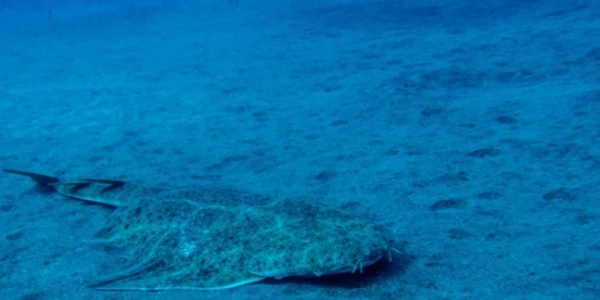
As an example, eDNA has been recently employed to locate the critically endangered angel shark (Squatina squatina) in Corsica, a species that was once believed to be extinct due to overfishing and habitat loss.
Why this matters?
The use of environmental DNA (eDNA) enabled scientists to detect a critically endangered species in an area where it was previously thought to have vanished, offering a promising opportunity for rediscovery.
This breakthrough not only underscores the potential for finding species previously believed to be lost but also facilitates immediate conservation action. Ultimately, this rediscovery offers hope for the species’ survival and emphasizes the importance of continued innovation in marine conservation efforts.
Additionally, it demonstrates how eDNA can enhance traditional conservation methods by providing more accurate, comprehensive data through a non-invasive, rapid, and cost-effective approach.
Results were published in the journal Aquatic Conservation: Marine and Freshwater Ecosystems and can be accessed here.
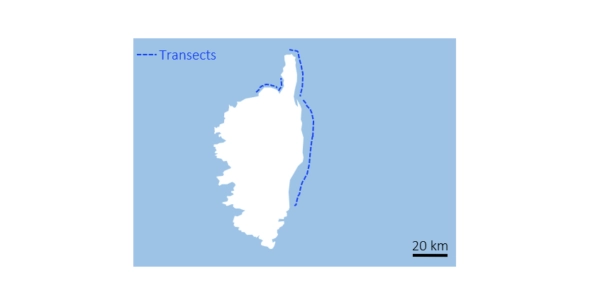
Location: Corsica (France)
Ecosystem: Coastal, soft seabeds at the lower limit of Posidonia oceanica seagrass meadows, the typical angel shark habitat.
Depth: 40 m
Sampling method: via 30 liter filters on 76 non-overlapping 2.5 km transects, using a peristaltic pump towed behind a ship.
Taxonomic group: angel sharks (Squatina species), via species-specific primers.