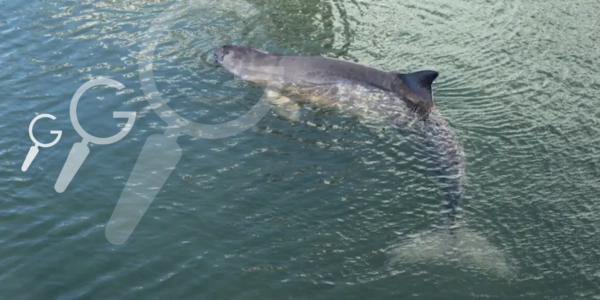
Monitoring large marine mammals, such as pygmy and dwarf sperm whales, is difficult due to their low population densities, wide-ranging habitats, and infrequent sightings.
Environmental DNA (eDNA) metabarcoding offers a promising solution by detecting DNA traces left by organisms in their surroundings. This method recently facilitated the first detection of the dwarf sperm whale near Malpelo Island, Colombia, using surface water samples.
Why this matters?
This breakthrough underscores the potential of eDNA metabarcoding as a tool for detecting rare, elusive, and data-deficient marine mammals.
Traditional methods for studying such species —such as visual observations, telemetry, or acoustic surveys— are often limited by the animals’ scarce populations, vast ranges, and elusive behaviors. In contrast, eDNA provides a non-invasive approach that enables precise species identification without the biases of human observation or the need for close-range encounters.
This is especially critical for cetaceans, whose sighting records are often incomplete or inaccurate due to misidentifications in the field. The study also demonstrates how eDNA can address significant gaps in the distribution data of rare species, enhancing our capacity to design effective conservation measures.
Results were published in the journal Ecology and Evolutions and can be accessed here.
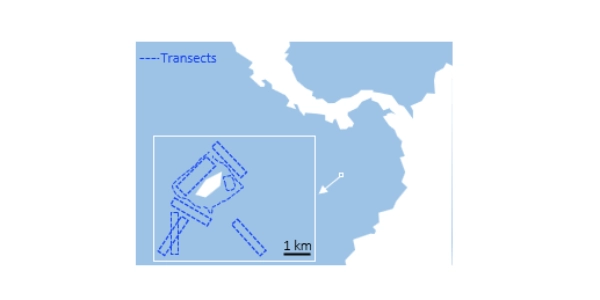
Location: Malpelo Island (Colombia)
Ecosystem: Coastal
Depth: 0-1 m (subsurface)
Sampling method: via two 30 liter filters on 13 non-overlapping 5 km transects, using two peristaltic pumps on each side of a ship.
Taxonomic group: dwarf sperm whales (Kogia species), via vertebrate (Vert01) and mammal (Mamm01) primers.