eDNA identified 115 fishes and 113 other vertebrate species along the upper Oyapock River.
Fish and game species mentioned in the Local Ecological Knowledge (LEK) surveys were a subset of those detected with eDNA.
At the ‘good’ sites, eDNA species richness of fish and game species was on average 2.73 times and 1.69 times greater than that obtained with the surveys, respectively. At the ‘medium’ and ‘poor’ sites was 2.33 times and 3.25 times higher.
Why this matters?
While LEK reflects how people are connected to and exploit the region, eDNA provides an objective and standardised assessment of biodiversity.
Sites consistently exhibited greater species richness and higher detection frequencies with eDNA compared to surveys. But despite the differences, both approaches provided similar insights into changes in species distribution due to environmental variability and anthropogenic activities (deforestation and gold mining).
Comparing standardised biodiversity assessments with LEK, when considered in its full context, can lead to a more comprehensive understanding of human-nature relationships, which are shaped by socioeconomic, cultural, and resource availability factors.
Results were published and can be accessed here.
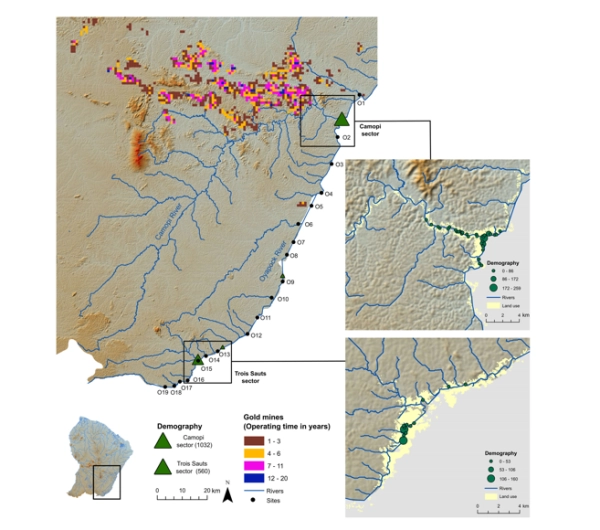
Location: French Guiana.
Ecosystem: Upper 160 km of the Oyapock River.
eDNA Sampling method: eDNA was collected from 19 sites during the wet season (April). At each site, 2 field replicates were taken, with 30 L of freshwater filtered per replicate using SPYGEN’s high-capacity filters and a peristaltic pump.
Local Ecological Knowledge: Freelist surveys were conducted with 7 Wayãpi participants, aged 40 – 60 years.
Taxonomic group: fishes and vertebrates, via SPYGEN’s teleo and V05 primers.