This study assessed fish biodiversity in seaports using eDNA metabarcoding, comparing them to natural habitats like marine reserves and fishing grounds.
Results show seaports host more threatened species and have species richness similar to reserves, indicating a positive impact on fish biodiversity.
However, fish assemblages within seaports were less differentiated than those outside, suggesting biotic homogenization in these artificial habitats.
Why this matters?
This discovery challenges the idea that seaports only harm marine life, showing they can support fish biodiversity, including threatened species, by serving as shelters and nurseries.
However, natural habitats remain essential for maintaining functional diversity and ecosystem stability. Strengthening regulations and enhancing seaport structures could further boost biodiversity. Finally, this study highlights eDNA’s value for monitoring species in artificial habitats.
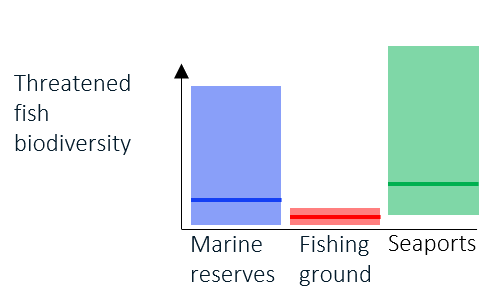
[Image Caption: threatened species richness marine reserves (blue), adjacent fishing ground (green) and nearby no-take areas seaports (orange)]
Results were published in the Conservation Letters and can be accessed here.
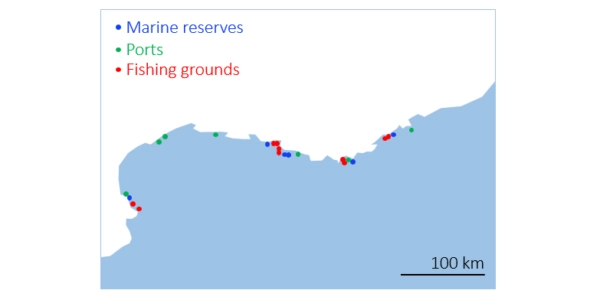
Location: Mediterranean
Ecosystem: Coastal
Depth: 0-1 m
Sampling method: via 30 liter filters linked to a peristaltic pump on one side of a kayak (ports; the transect was repeated twice to produce replicates) or on each side of a ship (reserves / fishing grounds).
Taxonomic group: teleost and elasmobranch fishes, using teleo primers.