The use of environmental DNA (eDNA) for biodiversity inventories is crucial for understanding ecosystem health, detecting environmental changes, and guiding conservation efforts. Traditional methods are often resource-intensive and limited in scope.
The 2023 BioDivMed mission used eDNA to comprehensively assess all French Mediterranean coastal waters in just two months on the field, providing an unprecedented snapshot of Mediterranean biodiversity.
Why this matters?
The BioDivMed mission represents a major breakthrough in marine biodiversity monitoring, offering a standardized, more comprehensive, and scientifically rigorous approach to assessing coastal ecosystems.
Biodiversity assessments have been slow and resource-intensive, requiring years to cover an entire coastline with conditions constantly changing. By leveraging eDNA and coordinating large-scale oceanographic campaigns, BioDivMed has provided a near-instantaneous and complete snapshot of French Mediterranean marine life with just two months of fieldwork (including 267 fish species inventoried).
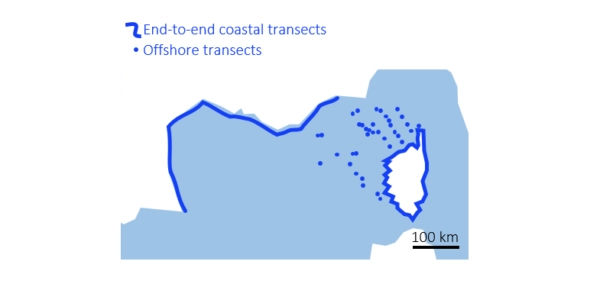
This unprecedented dataset, based on 700 sampling stations, will establish a critical baseline for marine conservation and sustainable fisheries management. Beyond its scientific impact, BioDivMed also enhances public awareness and policy-making by making biodiversity data more accessible and actionable, reinforcing the urgent need for marine protection efforts.
Location: Mediterranean
Ecosystem: Coastal and offshore
Depth: 0-1 m (surface)
Sampling method: via two 30 liter filters on 700 non-overlapping 2 km transects, using two peristaltic pumps on each side of a ship.
Taxonomic group: marine mammals and fishes, using Mamm01 and teleo primers, respectively.