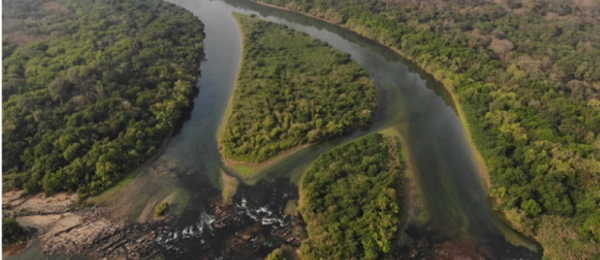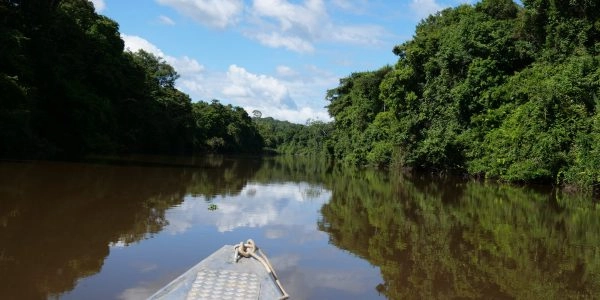
Findings revealed that, while the increase in disturbances (deforestation) did not result in major biodiversity decline, it continued to drive alterations in community taxonomic and functional richness.
Mammal communities showed a decline in species with extreme functional traits (i.e., species with highly unique ecological roles), while fish communities lost functional redundancy in generalist functions (i.e., fewer species performing similar roles) and exhibited a reduction in extreme functional strategies (e.g., highly specialized ecological niches).
Why this matters?
Using eDNA, it is possible to track biodiversity changes over time and link them to subtle environmental variations. This early detection enables intervention before ecosystems become severely degraded.
A total of 185 fish species and 54 mammal species were detected across both sampling years.
Between 2017 and 2021, the region experienced a mean annual deforestation rate of 46.6 km², notably higher than the 34.6 km²/year average recorded over the longer period 2000–2023.
In 2017, fish species richness was 2.19x higher in non-deforested sites compared to deforested ones (1.88x higher in 2021). A similar trend was observed for mammals, with species richness in non-deforested areas 1.6x higher in 2017 (and 2.22x higher in 2021), highlighting the negative impact of deforestation on biodiversity.
Results were published and can be accessed here.
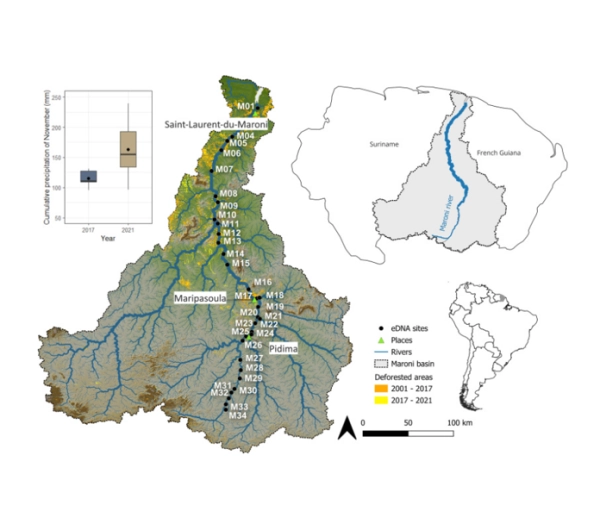
Location: Between French Guiana and Suriname, in the northeastern Amazonian biome.
Ecosystem: Maroni River.
eDNA Sampling method: eDNA was collected from 34 sites surveyed during the dry season (November) in both 2017 and 2021. At each site, 2 field replicates were taken, with 30 L of freshwater filtered per replicate using SPYGEN’s high-capacity filters and a peristaltic pump.
Taxonomic group: Fish and Mammals via SPYGEN’s teleo and V05 primers.