Using eDNA, 125 species of aquatic and terrestrial vertebrates were recorded, including 21 new to the country, such as, the Egyptian fruit bat Rousettus aegyptiacus, the Gray-headed nigrita Nigrita canicapillus, and the Gray-throated rail Canirallus oculeus.
11 imperiled species were detected (i.e. at risk of extinction or facing serious threats), including 2 Critically Endangered, the Western chimpanzee Pan troglodytes verus and the mussel Pleiodon ovatus.
Why this matters?
In remote regions, traditional biodiversity surveys can be cost ineffective and may require expensive and time-consuming approaches, especially given the high habitat diversity and the likelihood of hosting many rare, cryptic, and inconspicuous species.
This study underscores the potential of eDNA surveys to fill biodiversity knowledge gaps.
Highlights of other vertebrate species detected include species associated with aquatic habitats such as the vulnerable Common hippopotamus Hippopotamus amphibius and the Senegal flapshell turtle Cyclanorbis senegalensis, but also species living in the forests surrounding the Corubal river, such as the Endangered Temminck’s red colobus Piliocolobus badius temminckii, the Western pied colobus Colobus polykomus, and the vulnerable Sooty mangabey Cercocebus atys.
Results were published and can be accessed here.
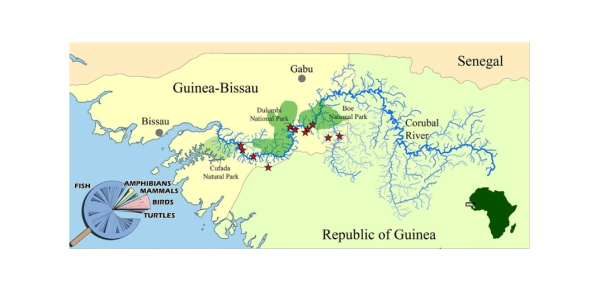
Location: Guinea-Bissau.
Ecosystem: Lower half of the Corubal River.
eDNA Sampling method: eDNA was collected from 11 sites selected to encompass the major aquatic habitats represented in the region. Sampling was conducted during the dry season. At each site, 2 field replicates were taken, with 30 L of freshwater filtered per replicate using SPYGEN’s high-capacity filters and a peristaltic pump.
Taxonomic group: Fish, Bivalves, Vertebrates and Eukaryotes via SPYGEN’s teleo, unio, vene, V05 and euka primers.