Residual DNA retained within the Niskin bottles was identified as the source of false positives. Despite bleaching and sunlight exposure, DNA from a previous Indian Ocean expedition persisted on internal bottle surfaces 3 months later.
Laboratory contamination was excluded, as no Indo-Pacific samples were processed during this interval and re-extraction and re-amplification consistently yielded the same contaminant sequences.
In contrast, SPYGEN’s independent filtration protocol, using site and mission dedicated materials, minimizes cross-depth and cross-mission DNA carryover.
Unexpected Findings: Indo‑Pacific Species in Mediterranean Deep Samples
| Order | Family | Taxon | 0 m | 150m | 200m |
| Acanthuriformes | Zanclidae | Zanclus cornutus | x | x | |
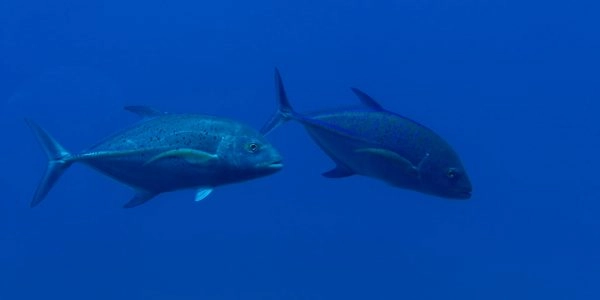
| Carangiformes | Carangidae | Caranx melampygus | x | ||
| Labriformes | Labridae | Gomphosus caeruleus | x | ||
| Lutjaniformes | Lutjanidae | Lutjanus kasmira | x |
*None of the Indo-Pacific taxa detected occur naturally in the Mediterranean Sea, nor are they recognized as Lessepsian migrants. Their native ranges lie within tropical Indo-Pacific reef systems, including the Red Sea for some species, making their detection in temperate Mediterranean waters ecologically non plausible.
Why this matters?
Several Niskin-based studies report increasing cumulative species richness with additional sites and casts, even after standard decontamination. While often interpreted as progressive biodiversity discovery, this pattern may partly reflect residual DNA persisting in sampling equipment.
This case demonstrates that standard cleaning may not fully reset molecular background between distant deployments, leading to artificial richness inflation and false positives.
Such contamination can distort baselines, trigger unjustified alerts, and result in flawed decisions and unnecessary costs.
Because contamination risk is material-dependent, material choice is critical, highlighting the importance of single-use or mission-dedicated materials.
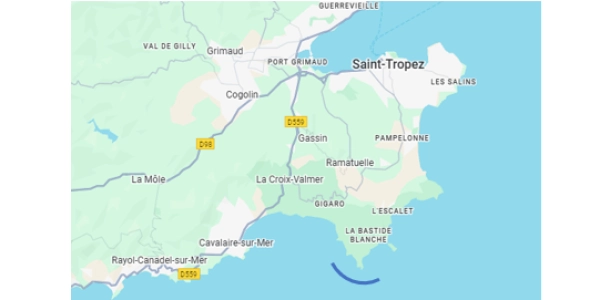
Location: Cap Lardier (France).
Ecosystem: Coastal
Sampling method: Water was collected at depths of 0 m, 150 m, and 200 m using Niskin bottles previously deployed during an Indian Ocean expedition 3 months earlier and subsequently decontaminated by bleaching and UV exposure prior to reuse.
Taxonomic group: fishes, via SPYGEN’s teleo primer.