The BIODIVMED 2023 operation conducted the first synchronized and standardized scientific inventory of marine biodiversity.
It encompassed the French Mediterranean waters from the Italian to the Spanish borders, including all around Corsica, ports, lagoons, and the Pelagos Sanctuary.
Contact Our Team of eDNA Experts
The inventory was performed using environmental DNA and in accordance with the high-quality standards set forth by the VigiLife Alliance. This pioneering approach, developed since 2011 by the company SPYGEN, enables the detection of numerous species, including the rarest ones, presenting strong potential for developing a new generation of indicators to assess the health of marine waters.
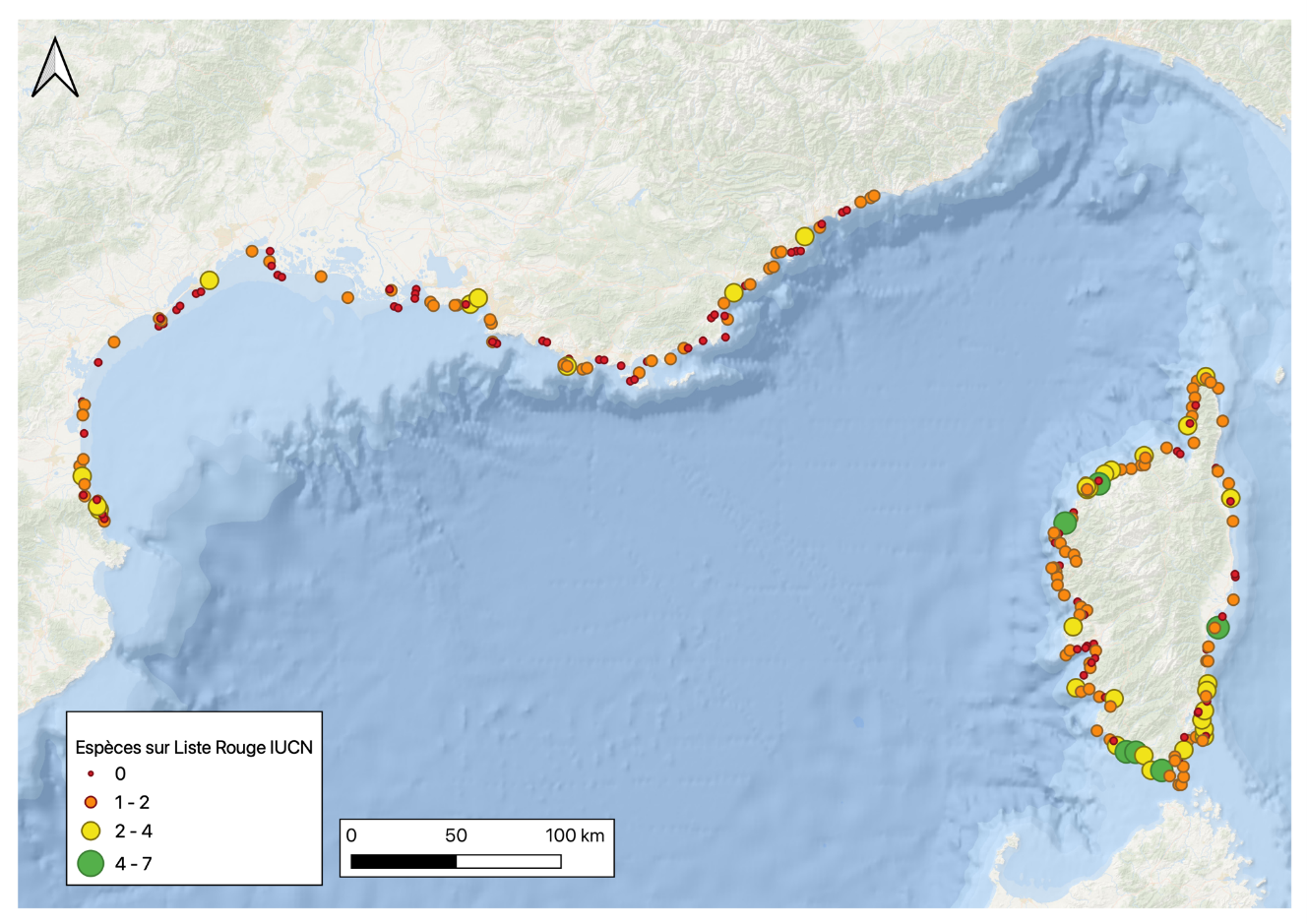
For the BIODIVMED 2023 operation, 700 samples of eDNA were collected over 2000 kilometers of coastline between May and August 2023, achieving a level of species detection that had never been achieved with conventional methods (267 fish species, including 17 present on the IUCN Red List).
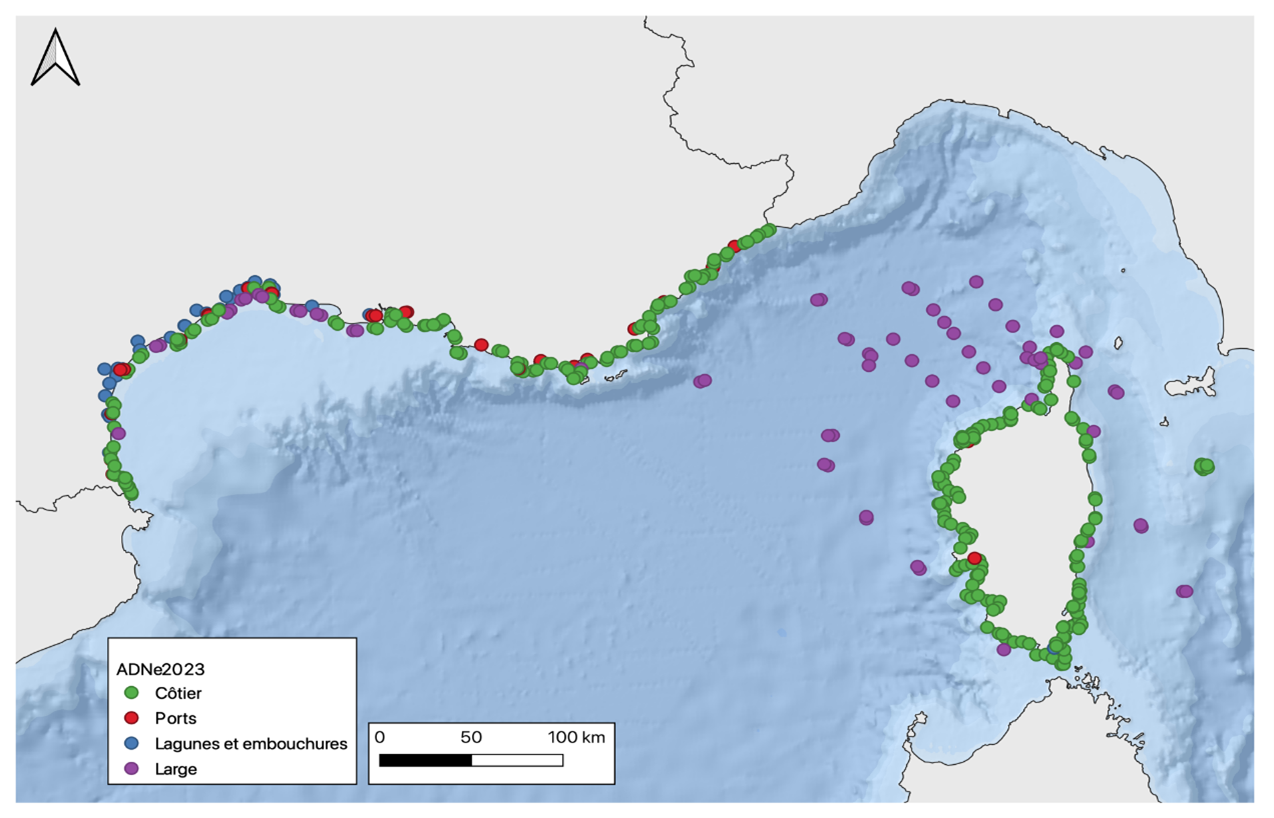
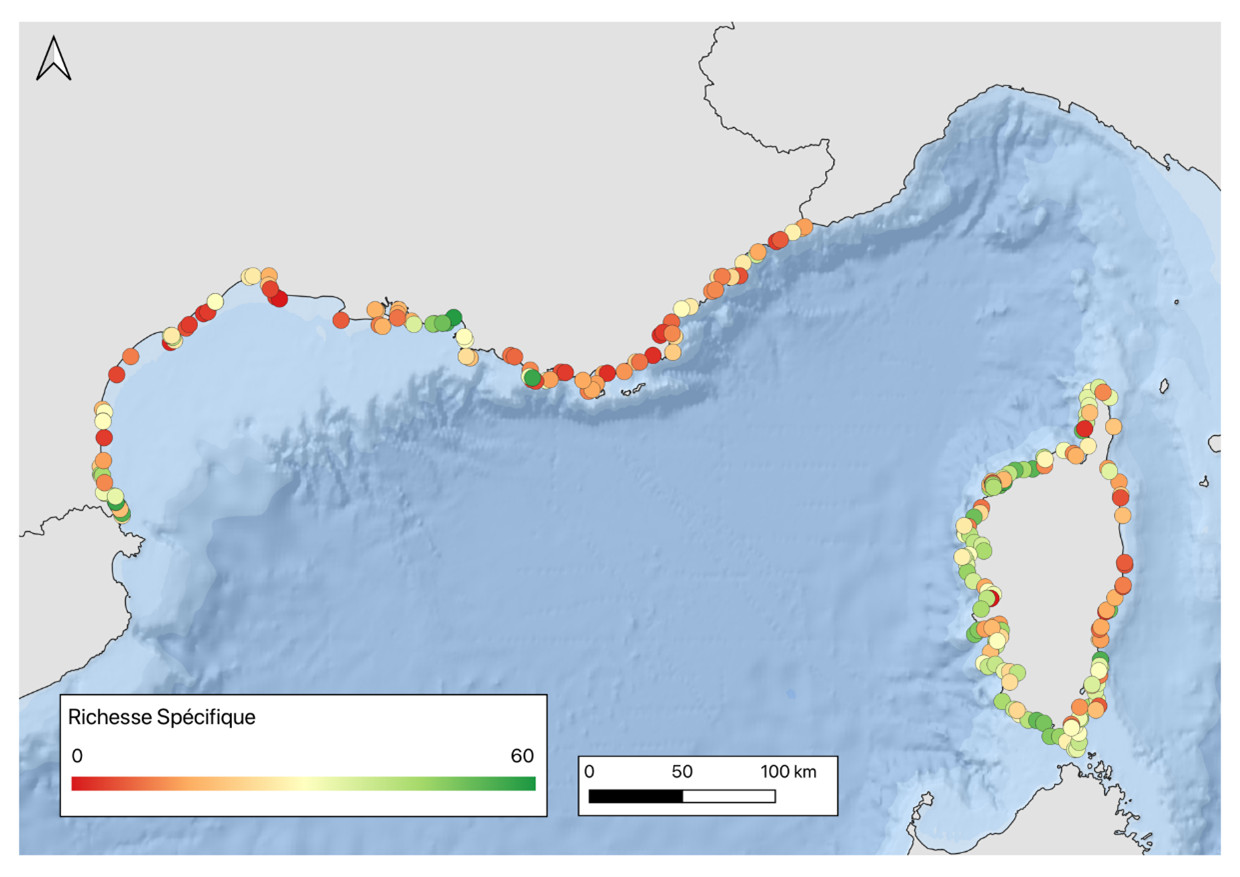
For each site, two indicators were compiled:
- Species richness, which includes the number of observed fish species per site (ranging from 4 to 58 species);
- And a new indicator mapping the Number of Fish Species on the IUCN Red List per Site. We propose that this latter indicator serves as a critical measure of human pressure and should be used as a future reference for monitoring coastal marine waters.
- eDNA also allows for the analysis and early detection of non-native species.

The monitoring of specific sites, either considered as references or as of particular interest, will continue in 2024. Ultimately, permanent monitoring sites for marine biodiversity will be established throughout the French Mediterranean waters, and a broader screening of water masses may occur on a four-year cycle to monitor major developments.