This study assessed fish and elasmobranch diversity across depth in the largest MPA in France (Corsica), using eDNA metabarcoding of 200 seawater samples collected between 1 and 835 m, a depth range no traditional survey method could cover at this scale.
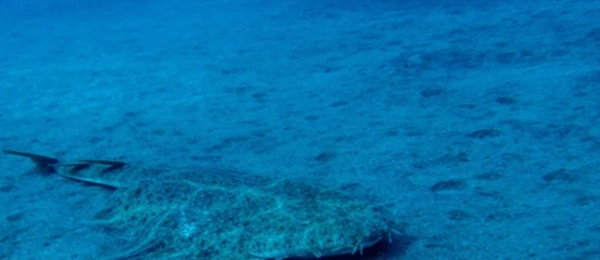
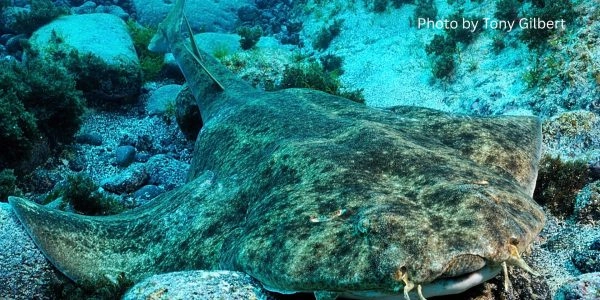
Results show the mesophotic layer (30–149 m) hosts the highest fish species richness, the highest functional diversity, and the only detections of EDGE species*: the Critically Endangered angelshark (Squatina squatina) and the Endangered white skate (Rostroraja alba).
Our results show species composition shifts markedly with depth, revealing distinct communities rather than nested subsets. This mesophotic hotspot, outside the reach of both current MPA boundaries and conventional monitoring tools, had remained an undocumented blind spot until now.
* EDGE species – living fossils under threat: this score combines evolutionary uniqueness with extinction risk. The angel shark detected here carries 49 million years of unique evolutionary history found nowhere else.
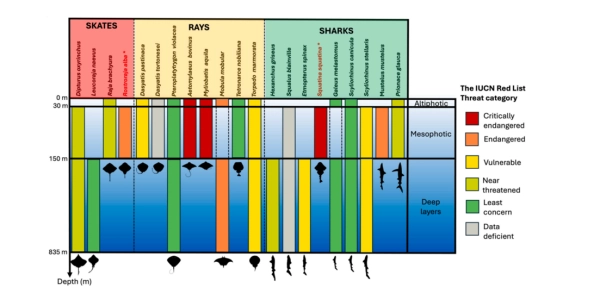
This figure shows depth distribution by IUCN status for each elasmobranch detected (21), revealing distinct, sometimes non-overlapping, depth ranges.
- The Marbled electric ray (Torpedo marmorata) spans every layer, surface to 835m: wide-ranging species need a full vertical corridor, not an isolated band.
- While the Bluntnose sixgill shark (Hexanchus griseus) appears only below 150m: some species live entirely outside where most MPAs reach.
Why this matters?
Conservation targets like “30% by 2030” are measured in surface area, leaving mesophotic and deeper habitats among the least protected zones worldwide, even though fishing reaches every depth.
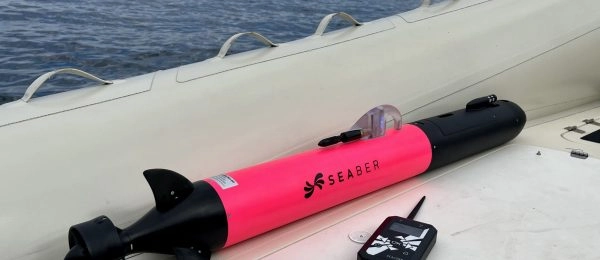
This gap persisted not for lack of concern, but for lack of a practical way to survey it: traditional methods become harder, costlier and riskier with depth. eDNA removes that barrier, the same protocol surveyed 1 to 835 m across 200 locations, revealing a previously undocumented hotspot for endangered elasmobranchs.
eDNA is what makes 3D, volume-based conservation operationally realistic, not just conceptually desirable.
Results were published in Biological Conservation and can be accessed here.
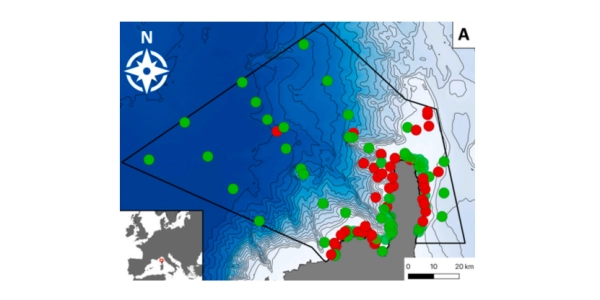
Location: Mediterranean (Corsica, France).
Ecosystem: Coastal to deep-sea (meadows, canyons, seamounts, abyssal plain).
Depth: 1–835 m.
Sampling method: 30–60 L via surface, diver-operated, or deep submersible pump.
Taxonomic group: teleost and elasmobranch (teleo 12S).