A survey was conducted in deep, previously unexplored submarine canyons off Banyuls-sur-Mer, combining surface transects with mirrored deep transects using autonomous underwater vehicles (AUVs).
The AUV transects detected 125 fish species, compared to 106 at the surface, with only 61 species in common, confirming that deep sampling reveals a markedly distinct community that surface sampling alone misses.
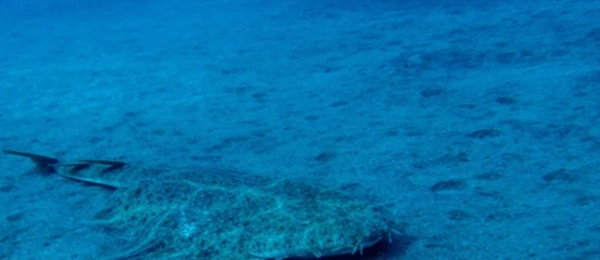
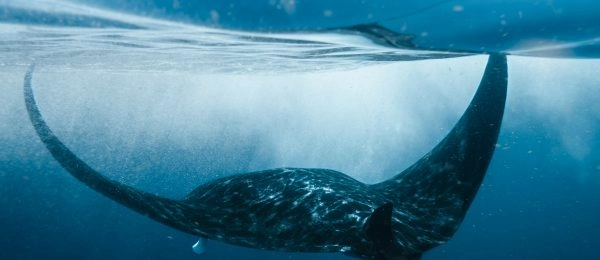
Additionally, 13 chondrichthyan species (sharks and rays) were detected, 8 of which were identified exclusively through deep AUV transects, including highly mobile and threatened species such as, Alopias vulpinus (EN), Mobula mobular (EN), and Hexanchus griseus (LC).
Why this matters?
- Mesopelagic fish communities, largely invisible to conventional approaches, can now be monitored using this standardized method, which also integrates environmental data (temperature and seafloor topography).
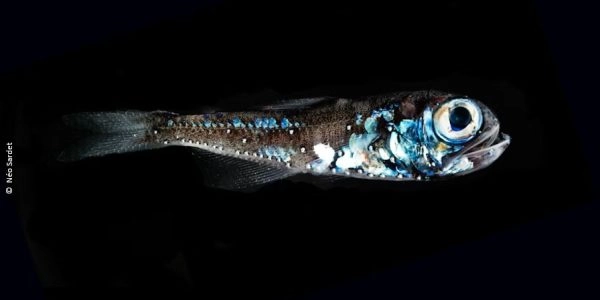
- Strong bathymetric structuring is observed, with mesopelagic taxa consistently detected below 200 m, revealing clear differences between surface and deep communities.
- This approach enables high-resolution monitoring across depth gradients by turning former “blind spots” into measurable zones, improving our understanding of ecosystem structure and supporting the tracking of vulnerable species such as deep-sea sharks.
- It is particularly effective for analysing communities of vertical migrators, capturing diel movements and providing a clearer picture of life inhabiting depths beyond 200 m.
Characterising mesopelagic communities traditionally requires dedicated deep midwater trawling, involving large research vessels, specialised gear, and significant financial resources. Even under these conditions, results are often biased by net avoidance and mesh selectivity.
In contrast, eDNA reveals taxa from multiple depth strata in a single, logistically simple sampling effort. This provides a powerful and cost-effective alternative for large-scale biodiversity monitoring, including under the Marine Strategy Framework Directive.
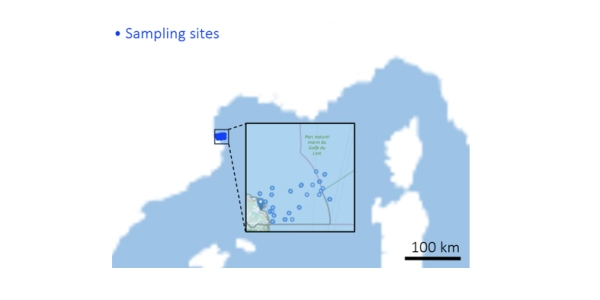
Location: French coast off Banyuls-sur-Mer (Lion Gulf).
Ecosystem: Coastal and deep-sea canyons.
Depth: 0-300 m.
Sampling method: via two 30 L filters on 23 non-overlapping 1-2 km transects across a bathymetric gradient, using peristaltic surface pumps and eDNA-collecting AUVs.
Taxonomic group: fishes, via SPYGEN’s teleo primer.