Tropical biodiversity is the richest and least documented on Earth. Yet, in a context of accelerating habitat loss, many species evade traditional surveys entirely, being known only from museum specimens, bycatch records, or a handful of sightings decades apart. Where months of fieldwork once failed to detect a species, a few liters of filtered water can now reveal its presence with certainty.
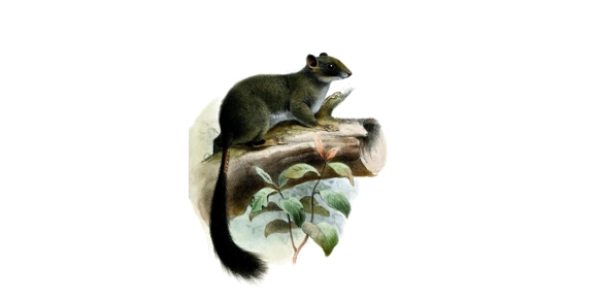
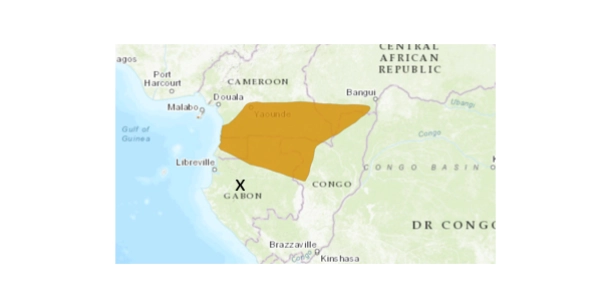
In water, eDNA captures not only the genetic signatures of aquatic species, but also those of semi-aquatic, terrestrial, and aerial species. Applied to Gabonese rivers, this approach uncovered an exceptional result: the rediscovery of Zenkerella insignis — one of the world’s most enigmatic mammals, never seen alive by scientists and sequenced only in 2016 from a dead specimen — detected for the first time by eDNA and outside its previously known range.
Why this matters?
Vertebrates include fish, amphibians, reptiles, birds, and mammals. Key findings from the Gabonese freshwater eDNA survey:
- Cameroon scaly-tail Zenkerella insignis: One of the world’s least-known mammals, known only from a dozen dead specimens housed in various museum collections. Detected by eDNA for the first time, and outside its previously known range.
- Giant otter-shrew Potamogale velox: An elusive mammal species known from only a single record in Gabon over the last 40 years.
- African dwarf crocodile Osteolaemus tetraspis: A cryptic, forest-dwelling crocodilian classified as Vulnerable (IUCN). Rarely surveyed due to its nocturnal habits and dense forest habitat; eDNA confirmed its presence across multiple sampling sites.
- African forest elephant Loxodonta cyclotis: Critically Endangered. Detected at river crossing sites, illustrating eDNA’s capacity to monitor terrestrial megafauna through waterbody sampling.
Field sampling and eDNA analysis by SPYGEN. Survey conducted in partnership with FSC-certified forestry concessions in Gabon.
Find out more here. Reference: Prié, V., A. Valentini, F. Trolliet, F. Priser, S. Toint, A. B. Obame, P. N. Oyan & L. White submitted.- A pilot study using environmental DNA in Gabon to evaluate the impact of forest management on biodiversity. Global Ecology and Conservation.
Location: Freshwater rivers within FSC-certified forestry concessions in the Republic of Gabon, Central Africa.
Ecosystem: Freshwater River.
Depth: Surface Sampling.
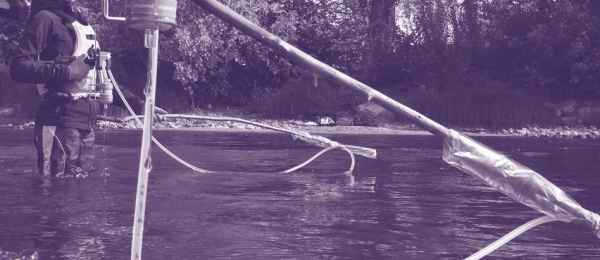
Sampling method: Multiple sampling sites were established along river networks. At each site, two 30-liter replicates were filtered using a 0.45 µm filtration capsule and a peristaltic pump. Sampling was performed facing the current, just below the water surface, to minimize contamination risks.
Taxonomic group: Vertebrates, analyzed via SPYGEN’s V05 primer (multi-taxon vertebrate metabarcoding).
Map legend: Orange indicates the known distribution of Zenkerella insignis according to the IUCN Red List. The cross marks our sampling location in Gabon.